
TL;DR
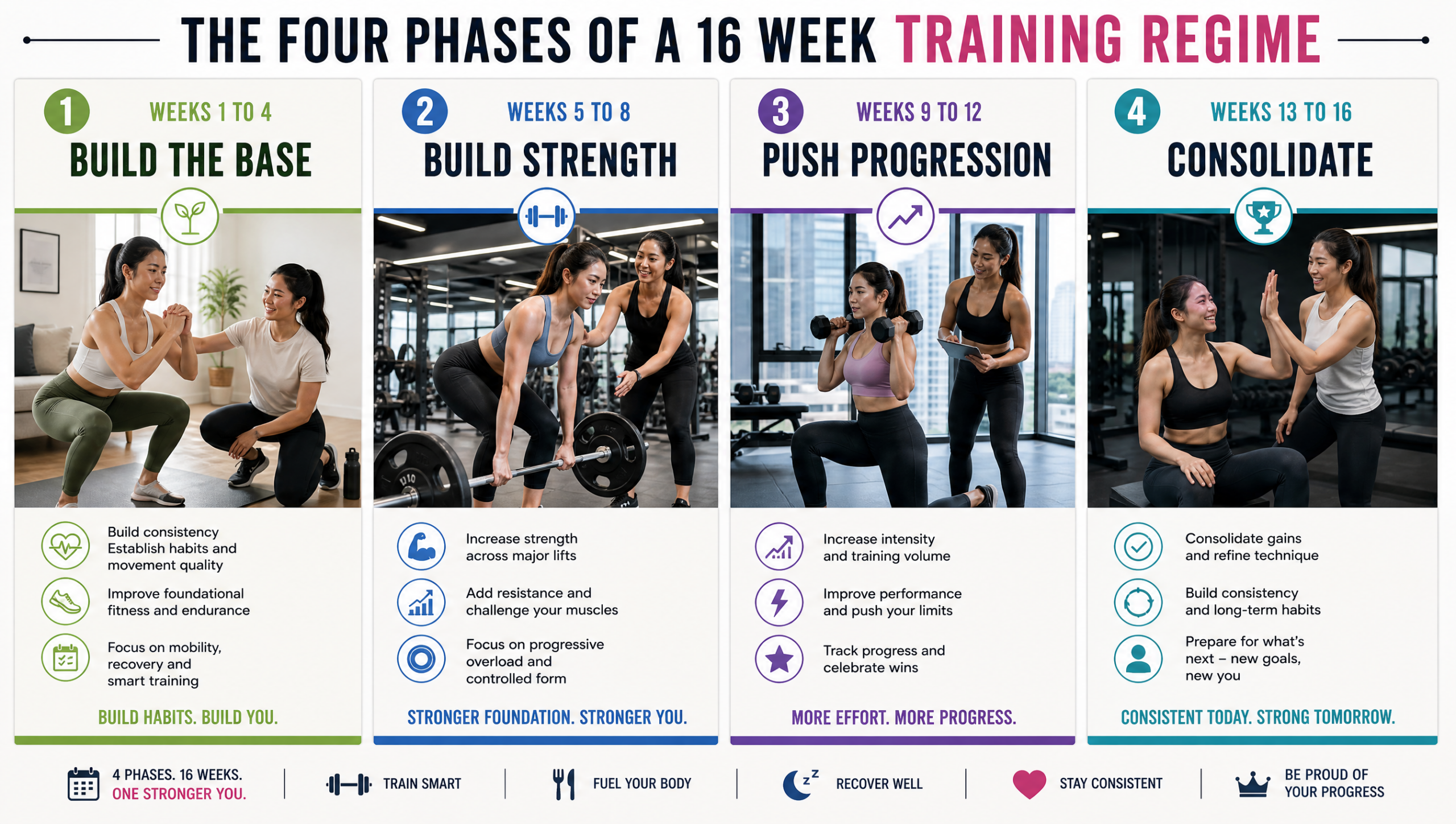
Sixteen weeks is long enough to change body composition meaningfully and short enough to stay focused. Build it in four phases: learn the movements, build strength, push progression, then consolidate. Train three times a week with resistance work at the centre, track more than the scale, and expect the visible change to arrive around week six to eight.
Sixteen weeks comes up constantly in transformation programmes, and for good reason. It is four months, which is long enough for real change in body composition and strength, and short enough that you can hold focus without the whole thing becoming your personality.
This guide sets out how a sixteen week block is structured for women, what each phase should focus on, and what progress actually looks like along the way.
Why sixteen weeks works
Shorter blocks of six or eight weeks tend to produce mostly water weight changes and a lot of enthusiasm that has nowhere to go. Longer open ended programmes tend to lose urgency somewhere around month three.
Sixteen weeks gives you enough time to move through several progressive training phases, adapt your habits properly, and see change that is structural rather than temporary. It also gives you a defined endpoint, which helps enormously with adherence.
The four phases
Weeks 1 to 4: build the base
The focus here is technique and consistency, not intensity. You are learning the main movement patterns properly: squat, hinge, push, pull and carry. Loads stay moderate so your trainer can see and correct how you move.
This phase also establishes the habits around training, including sleep, protein intake and general daily movement. Most people want to skip ahead here. Do not. Everything in the next twelve weeks is built on the technique you set now.
Expect strength to climb quickly in this phase, largely through neurological adaptation rather than muscle gain. The scale may move a little or not at all. Both are fine.
Weeks 5 to 8: build strength
Loads increase and the programme becomes more demanding. You are now adding weight to the bar or the dumbbells session by session where you can, which is the mechanism that drives change in body composition.
This is usually where visible change starts. Clothes fit differently before the scale moves much, because you are gaining a small amount of muscle while losing fat. Measurements and photos become far more useful than body weight here.
Weeks 9 to 12: push progression
Training volume and intensity peak. Your trainer may introduce more advanced variations, tempo work, or increased density by shortening rest periods.
This is also where the first genuine plateau usually appears. Progress slows, and that is expected rather than a sign anything is wrong. The response is a deliberate programme adjustment, not simply trying harder.
Weeks 13 to 16: consolidate
The final phase brings the block to a proper close. Volume is often reduced slightly while intensity is held, which allows accumulated fatigue to clear and lets your progress show.
This is when most people take their end of block photos and measurements, and when the difference from week one becomes clearly visible. Your trainer should also be planning what comes next, because the point is not to finish, it is to keep going.
Training structure
For most women starting a sixteen week block, three resistance sessions a week is the sweet spot. Two works if your schedule is tight. Four suits people who are already training regularly.
A typical week might look like:
- Two to three full body or upper and lower split resistance sessions, each 45 to 60 minutes
- Progressive loading on the main lifts, tracked session by session
- Accessory work for areas you specifically want to develop
- Daily walking as the base of your general activity, rather than added cardio sessions
- One or two optional low intensity sessions such as swimming, cycling or a class you enjoy
Note what is not on that list: hours of cardio. Cardio has a place for cardiovascular health and general activity, but resistance training is what changes your shape.
Nutrition, kept practical
This is where most sixteen week programmes go wrong, usually by prescribing something too rigid to survive contact with real life in Singapore.
The principles that matter are simple. Eat enough protein to support the training you are doing. Build meals around a protein source, vegetables and a carbohydrate portion. Eat enough overall to train hard and recover, because under eating undermines both your results and your energy.
Practical guidance that works at a hawker centre, at a work dinner and on a weekend away will always beat a meal plan you abandon in week three. If you have specific dietary requirements or a medical condition, work with a qualified dietitian rather than relying on general guidance.
Tracking progress properly
Body weight alone is a poor measure over sixteen weeks, particularly for women. It fluctuates with water balance, sodium, sleep and your cycle, sometimes by two kilograms across a single week.
Track a broader set of markers instead:
- Measurements at the waist, hips and thigh, taken every four weeks
- Progress photos in the same lighting and clothing, every four weeks
- Strength numbers on your main lifts, recorded every session
- How clothes fit, which is often the first honest signal
- Energy, sleep quality and general mood
Common mistakes
- Going too hard in weeks one and two, then burning out by week five
- Weighing yourself daily and reacting to normal fluctuation
- Cutting food intake too far, which stalls strength progress and makes the block miserable
- Changing the programme every fortnight, which prevents any progression from accumulating
- Treating week sixteen as a finish line rather than a checkpoint
What happens after week sixteen
The block ends, the training does not. Most people move into a new block with adjusted goals, often shifting emphasis toward strength if the first block focused on fat loss. The habits built over sixteen weeks are the actual result. The photos are just evidence.
Frequently Asked Questions
Most women who train consistently three times a week over sixteen weeks see meaningful changes in body composition, clear increases in strength, and visible differences in measurements and photos. The exact scale of change depends on your starting point, consistency and recovery. Steady progress across the full block matters more than a dramatic first month.
No. Three resistance sessions a week is enough for most people, and adding more sessions is not automatically better. Recovery is when adaptation happens. Daily walking as background activity plus three well structured training sessions produces better results than seven hard sessions and poor sleep.
Missing a session occasionally has almost no impact on the outcome. Missing a fortnight will slow progress but is recoverable. The programme should be adjusted rather than restarted. Training at home or in your condominium gym reduces missed sessions considerably, since travel is the most common reason people skip.
Want a sixteen week training block written specifically for you? Rodandac trainers come to your home or condo gym across Singapore. Message us on WhatsApp for a free 60 minute trial session and an honest assessment of what four months could look like.
Comments +